

Dental Bridges – Downers Grove, IL
Goodbye Gaps, Hello New Smile!
Tooth loss can affect more than just your smile. It can change how you eat, the way you talk, and even how you feel about yourself to some degree. Fortunately, there’s a fantastic solution—a dental bridge. This simple, lasting prosthetic restores your smile to like-new, filling gaps left behind by missing teeth and keeping your grin healthy.
At Esplanade Dental Care, we provide exceptional dental bridges designed to look and feel like your natural teeth. Read more below to see how these remarkable prosthetics work and how you could benefit from them.
Why Choose Esplanade Dental Care For Dental Bridges?
- High Quality, Natural-Looking Dental Materials
- Expert Dentists who Love What They Do
- Caring and Passionate Dental Team
What is a Dental Bridge?

A dental bridge is a restorative prosthetic that replaces one or more missing teeth in a row. A series of pontics (artificial teeth) are fused together and anchored to healthy teeth with dental crowns.
Because of their attachment method, bridges are fixed in place, so you won’t need to remove them for cleaning or perform any special maintenance. If you have an area with one or more missing teeth flanked by structurally intact pearly whites, a dental bridge could present a practical and cost-effective solution.
Types of Dental Bridges
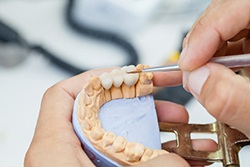
At our Downers Grove practice, we offer two main types of bridges to fit different smiles and lifestyles. However, the one you choose is dependent on several factors that should be discussed with your dentist.
This is why we recommend scheduling a consultation before considering your options. That way, you’ll have all the information you need to make an informed decision about your smile, including the style of bridge and your budget.
Traditional Dental Bridges
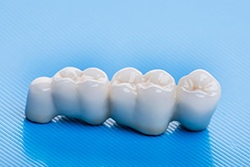
Traditional dental bridges are the most common type we place at our office. They use crowns on the teeth adjacent to the missing space to hold the bridge securely in place. This option is great if you:
- Have healthy teeth available on both sides of the gap.
- Are concerned about your budget.
- Don’t want a partial denture that could slip around as you speak.
Implant Bridges
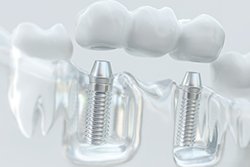
Implant bridges are a great choice for patients missing several teeth in a row. Instead of relying on healthy teeth for support, this model is anchored to dental implants—small titanium fixtures surgically placed into your jawbone.
Implant bridges are a fantastic solution for tooth loss because they preserve jawbone health and are just as stable as natural teeth.
The Benefits of Getting a Dental Bridge

Dental bridges offer both functional and cosmetic advantages that can greatly improve your quality of life, such as:
- Restoring your ability to chew and speak naturally.
- Preventing nearby teeth from shifting out of alignment.
- Maintaining the shape of your face by supporting your jaw and cheeks.
- Providing a fixed, long-term solution that doesn’t need special maintenance.
- Boosting your confidence with a complete, attractive smile.
At Esplanade Dental Care, we customize every bridge to match your natural teeth for comfort, stability, and beauty. If you’re ready to reclaim your grin, contact us today and schedule your consultation!
Dental Bridges FAQs
Can You Take a Dental Bridge Out?
While you might’ve thought otherwise, you can’t actually take a dental bridge out. This device will remain a secure part of your smile once it’s placed, so only dentists can successfully remove it.
Remember, a dental bridge is what dentistry calls a “fixed restoration.” It secures itself with nearby natural teeth – also known as abutments – or quality dental implants. Either way, the result is the same: the device becomes a permanent part of your mouth. Only a dentist will have the resources, training, and experience to remove a placed dental bridge, and they’ll only do so in emergencies.
Is Getting a Dental Bridge Painful?
It isn’t painful to get a dental bridge in Downers Grove, thankfully enough. The process is smooth, easy, and free of discomfort when done properly, so your treatment shouldn’t involve aches.
Your dentist will numb your mouth (with a topical anesthetic) before the bridge work starts. That way, the treatment site won’t hurt during your procedure; you’ll only sense a slight pressure at most. This effect even applies when you’re getting an implant bridge, as the dentist will numb your mouth prior to implant placement.
Of course, your mouth will likely feel sensitive after your bridge treatment. (The anesthetic will eventually wear off.) The good news is that this soreness fades quickly, and you can manage it with pain medications and other methods in the meantime.
How Do I Clean Under My Dental Bridge?
To care for your dental bridge effectively, you’ll need to clean its underside regularly. (Bacteria could gather in your gums and cause treatment failure otherwise.) That said, this cleaning process can take various forms depending on your situation.
One approach is to use a piece of traditional floss. After looping this thread through a threader, you could slide its pointed end beneath the bridge and out the other side. You’d then slide the floss back and forth under the restoration. To conclude the process, wrap the floss around each of the supporting teeth (or implants) and clean beneath the gums there.
Another method is to use an interdental brush. Also called an interproximal brush, it has puffy bristles attached to a wire. It can thus easily slide in and out of the space under your bridge.
Do Dental Bridges Look Natural?
As a matter of fact, today’s dental bridges look incredibly natural and lifelike. You can trust them to blend seamlessly with your smile right after their placement.
Note that most dental bridges now use metal-free, tooth-colored materials. These include ceramic, zirconia, porcelain, and other various substances. As such, you can trust these devices to match the enamel; even the way light bounces off of them will look similar.
Also, dental bridges use abutments (or dental implants) to remain stable and secure. They won’t fall out – and thus reveal themselves as “false teeth” – like regular dentures might.